Property Claims Face Longer Timelines as Costs and Complexity Rise
Labor gaps, equipment delays and more complex losses are straining property claims, while insurers and restoration firms test tools to improve workflows.
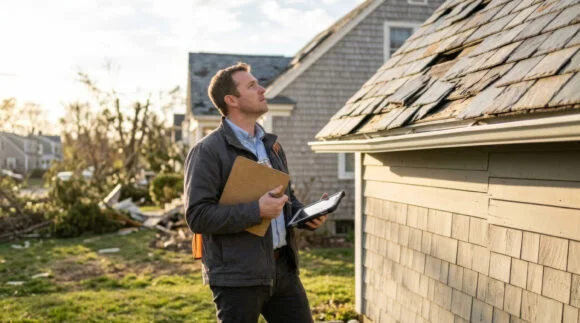
Property claims are taking longer to manage as labor shortages, equipment lead times and more complicated losses weigh on the work. Sedgwick’s annual Loss Adjusting Insights report examines eight trends and emerging risks affecting commercial and residential property claims in 2026. Its findings point to pressure on both claim timelines and costs, even as technology firms and insurers explore ways to move work along.

The constraints begin with the people and materials needed to inspect and repair damaged property. The construction industry is expected to need 349,000 additional workers this year, while lead times for some specialized equipment have more than doubled over five years. Catastrophe response also costs more to deploy. Andrew McCallum, Sedgwick’s vice president of specialty operations, said fuel and hotel expenses are among the costs pushing deployment higher.
Those pressures can compound: limited labor and delayed equipment can slow repairs, while longer projects require coordination among more participants. In a property claim, the adjustment and restoration work may depend on timely inspections, estimates, approvals and access to supplies. When one part stalls, the broader schedule can be affected.

Experienced claims staff are nearing retirement
Staffing pressure also reaches the claims workforce. Sedgwick’s report says a quarter of claim adjusters are expected to retire by the end of 2027. A survey by The Institutes on talent transformation asked industry participants about the likely effects of that retirement wave. Seventy-three percent identified loss of industry knowledge as a leading concern, and 53% cited the challenge of recruiting a new generation of talent. Respondents also raised the need to develop junior employees and the possibility of losing company leadership.
McCallum described the shift as a “silver tsunami,” saying retirements may drain experience at a time when claims are becoming more intricate. He pointed to the details of how policies are underwritten as one source of added complexity. For claim teams, the issue is not just filling open positions: less experienced staff may need time and support to build the judgment that experienced adjusters bring to investigations and loss evaluations.

That knowledge gap can matter most when a loss involves unusual damage, multiple coverage questions or several parties with a role in the work. The report’s figures suggest that employers face a linked challenge: preserving experienced staff knowledge while preparing newer workers to handle claims that demand more coordination.
Fewer assignments, with catastrophe claims making up more
Verisk’s separate claims-volume report offers another view of the market. U.S. claim assignment volume recorded through its XactAnalysis network was 1.24 million in the second quarter of 2026, a 12.2% decline from the same quarter a year earlier and 13.1% below the five-year average.

Catastrophe claims accounted for 43% of assignments in the quarter, compared with 34% five years earlier. Verisk attributes the higher share to a sharper drop in non-catastrophe assignments. The figures therefore describe a change in the mix of assignments as well as lower overall volume; they do not, on their own, show that catastrophe assignments rose in absolute terms.
Brant Wilson, CEO of ATI Restoration, said the company is seeing how higher deductibles affect smaller property losses. Some homeowners are choosing to handle those losses themselves. Some commercial property owners are also bringing repairs in-house, leaving restoration providers to compete for fewer jobs. Wilson said general contractors have entered that competition as well.

Large losses need early coordination
When a loss is larger, the work can involve multiple insurers, adjusters, brokers, environmental specialists and consultants, Wilson said. More participants mean more reviews and decisions. If information does not reach the person who can approve the next step, or if that person is identified late, the project may wait while questions are resolved.
Wilson said identifying decision-makers and coordinating their involvement early can help keep restoration work moving. For claim teams and property owners, clear communication about who is reviewing an estimate, what information is needed and who can authorize work can reduce avoidable pauses. The account does not remove the need for careful review; it shows why the path from inspection to approval can become more demanding as a claim grows.
Restoration work is also adapting to newer materials and equipment in buildings and vehicles. Batteries, electric vehicles and solar panels can add environmental considerations to fire cleanup and mitigation. Wilson said restoration providers need to prepare for the materials and hazards they may encounter, including the increased presence of batteries, EVs and solar panels.
Technology is being tested against practical needs
Artificial intelligence and digital tools are part of the response, but McCallum said the industry is still assessing which applications make a measurable difference. Companies are considering how mapping systems, AI assistance and dashboards might work together. The challenge is sorting useful tools from systems that remain in an early testing phase.
ATI uses AI to review estimates and organize project communications, Wilson said. The company is also developing an invoicing tool that can flag when completed work may be ready for billing. Employees remain responsible for decisions. That arrangement makes the technology a support for review and administration rather than a replacement for professional judgment.
The reports and company observations describe a claims process under pressure from several directions: fewer assignments overall, a larger catastrophe share, costly response deployments, labor and equipment constraints, and losses that involve more people and unfamiliar materials. Technology may help organize information and routine tasks, but the practical test will be whether it helps claim teams and restoration firms make decisions and complete work with fewer delays.


