Hormuz Transit Advisory Adds Time and Inspection Uncertainty for Shipping
Ships with no essential Gulf transit are advised to stay clear; vessels proceeding should allow extra time and prepare for possible inspections.
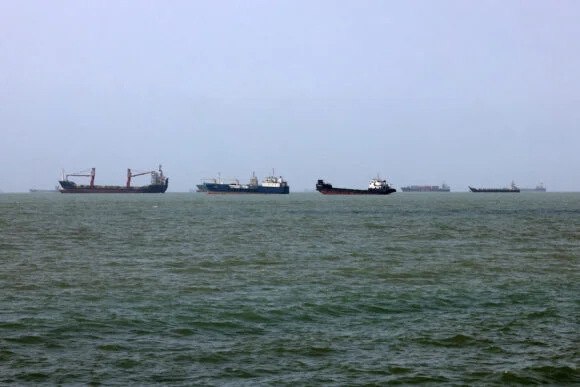
A new U.S. maritime advisory puts time and inspection uncertainty at the center of shipping plans for the Strait of Hormuz. Vessels without a need to travel between ports in the Gulf of Oman and the strait are advised to stay well clear. Those that do proceed should plan for longer transits amid denser traffic and blockade enforcement activity.

The notice was issued Wednesday by U.S. Naval Forces Central Command through the Joint Maritime Information Center. It cites the current geopolitical situation but does not explain what specifically prompted the advisory. For ship operators, that leaves the practical message clearer than the cause: avoid a discretionary passage, and build extra time into voyages that depend on the route.
Transit plans may need more time
The advisory warns that traffic density has increased and tells vessels to allow additional transit time. That can affect schedules beyond the strait itself: a delayed passage may change arrival timing and the coordination of vessel movements at nearby ports. The notice gives no estimate of how much extra time ships should plan for, so operators will have to account for conditions as their voyages develop.

The route has regained activity in recent months. Shuttle tankers make repeated trips between the Persian Gulf and the Gulf of Oman, where other tankers wait to receive cargoes without entering the strait. The arrangement helps move oil through the chokepoint while giving some vessels a way to avoid the passage.
At the same time, dozens of crude tankers have continued to transit despite the risk. Their movements have helped bring oil flows from the Persian Gulf close to prewar levels, while the U.S. blockade has pushed Iranian crude exports close to zero. These changes matter to shipping schedules because vessels are moving through a busy and closely monitored area under heightened tension.

Neutral vessels may face questions and searches
The advisory says neutral vessels carrying neutral cargo, as well as vessels sailing in ballast between neutral ports, may be questioned, visited and searched to confirm their intentions regarding the blockade. A vessel traveling without cargo is therefore not described as exempt from inspection. Operators should account for the possibility of additional interaction when planning passage and communicating voyage details.
The notice refers to a similar advisory issued publicly in mid-July, when the U.S. began its blockade of Iranian shipping. At that time, the U.S. said neutral passage through Hormuz would not be impeded, while warning that ships could be questioned about their intentions. The latest notice again flags possible questioning and inspection, while also asking vessels without a necessary transit to avoid the area.

The distinction matters for voyage planning: a vessel may be eligible to make a neutral passage and still encounter delays or inspection. The advisory does not say how long an inspection might take, how frequently one will occur, or whether every vessel in the described categories will be stopped. Those unknowns make schedule flexibility a practical consideration for operators and cargo interests.
Security conditions remain unsettled
Iran has increased attacks on ships, reaching a wartime high of almost 30 in October, according to the source report. The advisory arrives against that backdrop, but it does not directly attribute the warning to any particular attack. The report also says the U.S. military did not immediately respond to requests for comment on the notice.
For shipping and insurance professionals, the development points to a route where both operational timing and exposure require close attention. The source does not report changes to insurance terms, premiums or claim outcomes, and the advisory itself does not specify how insurers will respond. Vessel operators and cargo interests can monitor the route conditions, revisit voyage timing, and review the relevant policy provisions and reporting requirements with their insurance contacts.
The clearest takeaway is that passage remains active, but it may bring more traffic, extra transit time and possible questioning or searches. For ships without a necessary reason to enter, the advisory recommends staying clear; for those that must go, schedules need room for uncertainty.