Tesla Dealership Damage Case Highlights Multiple Property Losses in Kansas City
A guilty plea follows fire and gunfire damage to three Tesla vehicles in Kansas City, including a Cybertruck listed at $81,985.
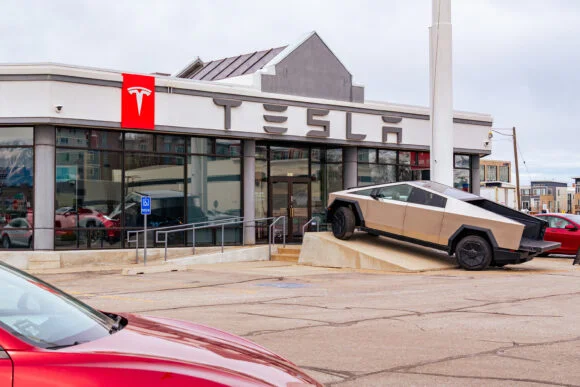
Damage at a Tesla dealership in Kansas City involved three vehicles, fire, gunfire and an unexploded incendiary device. Kevin Harkins, 28, of Barnhart, Missouri, pleaded guilty to malicious destruction of property related to arson and unlawful possession of an unregistered destructive device. The case illustrates how one incident at a vehicle site can leave several separate property losses to document and assess.

Damage extended beyond the vehicle that caught fire
The incident took place on Feb. 13, 2025, at the Kansas City Tesla Center. At about 9:25 p.m., responders were sent to the area after reports of gunfire and a fire. They found a Tesla Cybertruck with fire damage and about nine bullet strikes. A nearby Tesla Model Y had about seven bullet holes in its hood, and a second Cybertruck was hit by a bullet that appeared to have ricocheted from a round aimed at the first truck.
The Cybertruck damaged by fire had a sale price of $81,985. That figure describes the vehicle’s sale price; the source does not give a total estimate for all damage, say whether any vehicle was repaired or replaced, or describe insurance payments. The damage to the other two vehicles means the incident’s effects were not confined to the truck that burned.

Responders also found signs of a fire-starting attempt around the first Cybertruck: what appeared to be flammable fluid, broken glass, a charred cloth, a propane hand torch and a cigarette lighter. Nearby, they found an unbroken bottle with a cloth wick and an odor of suspected gasoline. Investigators identified it as a Molotov cocktail. The article does not report that the device ignited.

What the case means for property records
For a dealership handling a multi-vehicle incident, the practical recordkeeping challenge is to establish which items were damaged and how. Here, the account distinguishes fire damage and bullet damage on one Cybertruck, bullet holes on a Model Y, and apparent ricochet damage on another Cybertruck. Those details matter when a business is assembling a clear account of physical damage across its inventory and premises.

A business documenting a similar loss would generally want records that connect each damaged item to the event: photographs, vehicle identification and inventory details, repair or replacement assessments, and a timeline of when damage was discovered. Any available video or witness accounts could help establish the sequence, while records of cleanup and temporary security measures could show what the business did after the incident. These are general documentation steps, not a description of actions taken by Tesla in this case.
Coverage depends on the policies in force, their terms and the facts of a loss. The source does not identify Tesla’s insurance arrangements or say whether a claim was filed. It also does not explain how a policy might treat fire, gunfire, damage to inventory, an unexploded device or business interruption. Those questions cannot be answered from the vehicle sale price or the criminal charges alone.
Guilty plea and potential sentence
Harkins was first charged by complaint on Sept. 12, 2025. His guilty plea was entered in federal court on the two counts described in the case. For the count involving malicious destruction of property related to arson, the article says he faces a mandatory minimum of five years and a maximum of 20 years in federal prison, without parole. It provides no sentencing date or outcome.
For insurers and dealership operators, the case is a reminder that a single event can produce distinct damage across several vehicles, with different causes and evidence for each. The reported facts establish the scale and types of damage, but leave the insurance outcome unknown. A complete assessment would depend on vehicle-by-vehicle documentation, the applicable policy wording and any confirmed repair or replacement costs.