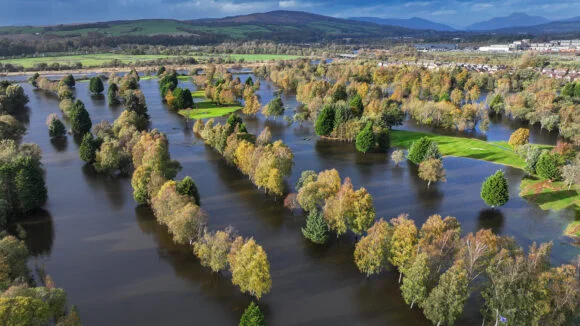
Drainage Questions Put Google’s Planned Finland Data Center Site Under Scrutiny
Investigators are examining drainage and water management at a planned Google data center site near Muhos, where preparatory work was halted.

Questions about drainage and water management have put preparatory work at a planned Google data center site near Muhos, Finland, under scrutiny. Finnish police said Thursday they had opened an investigation into suspected environmental law breaches at the construction site. The inquiry focuses, among other matters, on how water was managed and drained.

The case brings environmental exposure into view for a major infrastructure project, while leaving key facts unresolved. The reported investigation concerns suspected breaches; it does not establish that a breach occurred or determine what consequences may follow. For companies involved in large construction projects, that distinction matters: concerns raised during early site work can affect project planning and draw attention to environmental controls before a facility is built.
Work at the Muhos site and a second location was halted
Tuike Finland, an Alphabet subsidiary, carried out forest clearing and drainage at the planned Muhos site before the environmental impact assessments required under Finnish law had been completed, authorities have said. Police cited preliminary information indicating ambiguities and shortcomings in drainage and water management at the project site. Investigators will examine circumstances connected with those issues.

On October 6, Finland’s Supervisory Agency, which oversees environmental permits and assessments, ordered Google to stop preparatory measures that alter the environment at Muhos and at a separate site. The source does not identify that second location or describe the work underway there. The reported order covers preparatory activity, while the investigation concerns suspected breaches and water management at the construction site.
Google previously said it began preparatory work based on its understanding of the approvals required under relevant legislation. The company did not immediately respond to an emailed request for comment on the investigation, and Reuters said it could not immediately reach Tuike. The available information does not state whether work has resumed, what further steps the companies may take, or when investigators expect to complete their inquiry.

A major investment plan meets site-level questions
The Muhos project is part of a $15 billion investment in artificial intelligence infrastructure in Finland that Google announced the previous month. Google described it as its largest investment in Europe. Its planned Finnish spending includes data centers, electricity grid improvements, clean energy projects and battery projects supporting services such as Gemini, Search, Maps and YouTube.
Finland has attracted data center investment in recent years, with a cool climate and low-carbon electricity among the factors cited as appealing to companies. The source also describes the country as having had less vocal opposition to data center construction than some other places, including the United States. Those broader conditions help explain the scale of interest, but they do not resolve the questions facing an individual construction site. Here, the immediate issues are the timing of environmental assessments and the handling of drainage and water.

Finland’s Prime Minister Petteri Orpo described Google’s plan as an economic boost the previous month and played down concerns that it could consume large amounts of energy and raise electricity prices. Those comments addressed the wider investment and energy debate. The current inquiry, as described by police, concerns site preparation and water management.
What the investigation could mean for project risk
For insurers and businesses assessing construction or environmental liability exposures, the reported facts point to issues that can matter during site preparation: when assessments are completed, how drainage is designed and managed, and whether work alters the environment before required reviews are finished. The article does not identify any insurance policy, claim, coverage decision or loss, so it offers no basis to draw conclusions about coverage for the project.
In projects involving land clearing and drainage, clear records of site work, environmental reviews and water-management measures can help companies explain what was planned and what took place. The source does not say whether Google or Tuike has taken these steps. Their importance here is practical: investigators are examining the circumstances around drainage and water management, while the project’s timetable and the eventual findings remain unknown.
The next material developments are whether investigators clarify the suspected shortcomings, whether preparatory work remains stopped, and how the required assessments affect activity at Muhos and the separate site. Until those details emerge, the investment plan and the site-level inquiry remain distinct parts of the story: one signals the project’s scale, while the other raises questions about how construction began.