Turkiye Sigorta Shares Slide as Executive Shake-Up Deepens
Turkiye Sigorta shares fell 18% in two days after two senior executives were detained, adding pressure as the insurer postponed quarterly results.
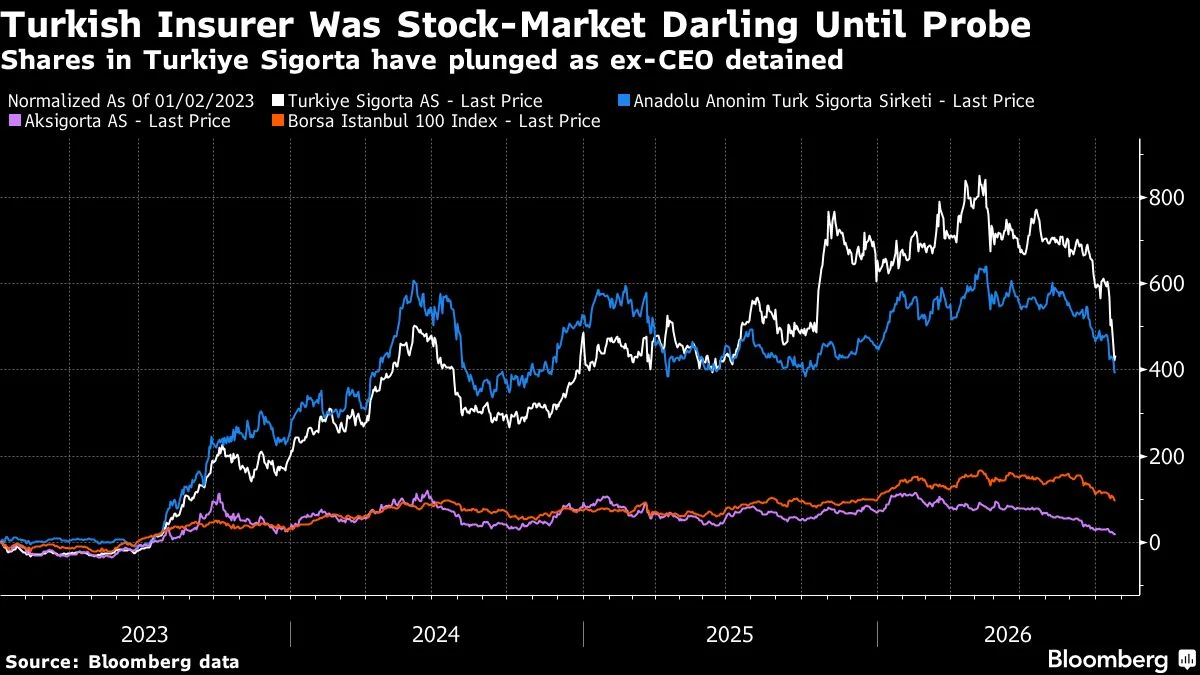
Turkiye Sigorta’s leadership changes and delayed financial results have added fresh uncertainty for investors in Turkey’s largest insurer. Its shares fell 18% over two days to their lowest level in almost two years after reports that Chief Executive Officer Taha Cakmak and Deputy CEO Gurol Sami Ozer had been detained in a probe involving alleged manipulation of investment funds.

The immediate questions for the company are operational as well as financial: who will lead it, when investors will receive its third-quarter results, and whether the allegations will affect confidence in its business. The available reporting does not establish that the insurer or either executive committed wrongdoing.
What has been reported
Turkiye Sigorta’s stock lost more than 40% of its market value after beginning a sharp decline in September. The latest two-day drop followed local media reports about the executives’ detentions earlier in October. The company announced Cakmak’s resignation on Oct. 15, then postponed its third-quarter results, which had been due Oct. 19. On Monday, its board announced that Ozer was also being dismissed.

Broadcaster NTV reported allegations, citing unidentified sources, that Turkiye Sigorta had directed cash into funds managed by Tera Portfoy Yonetimi, a brokerage firm at the center of the fund crisis. Cakmak’s lawyer, Ersin Yucel, said his client denies wrongdoing and intends to appeal the arrest. Turkiye Sigorta did not respond to multiple calls and emails seeking comment.
The wider investigation concerns claims that local investment funds bought shares in little-known companies and then drove their values sharply higher. Anadolu Agency reported that Cakmak and Ozer were detained earlier this month. Justice Minister Akin Gurlek said in a social media post this month that 88 suspects had been arrested. Those figures describe the broader case; the article does not identify the two executives as having been convicted.

The allegation about investment flows is attributed to NTV’s sources, while the denial and planned appeal were attributed to Cakmak’s lawyer.

A large insurer facing a period of uncertainty
Turkiye Sigorta is based in Istanbul and is 76% owned by Turkey’s sovereign wealth fund. It was formed in 2020 by combining insurance subsidiaries of state-owned banks. Since then, the company has grown quickly and holds the largest share of Turkey’s insurance market, according to its Oct. 21 presentation.
The company’s scale gives the executive changes significance beyond the share price. Insurers depend on steady management to oversee underwriting, claims, investment holdings and financial reporting. The source provides no indication that customer coverage, claims handling or policy terms have changed, so the reported stock movement and leadership changes should not be read as evidence of an immediate change to policyholders’ insurance protection.
Cakmak brought a finance-sector background to the role. Before leading Turkiye Sigorta, he had worked as a bank regulator and as a deputy governor of Turkey’s central bank. He was appointed in 2023. From that appointment through a peak in May, the insurer’s shares rose more than 500%, outperforming almost all other companies in the Borsa Istanbul 100 Index. The subsequent drop has erased a substantial portion of those gains.
The insurer’s postponed results leave investors without a scheduled update on its third-quarter performance in the reporting window described. The source gives no replacement date. Until the company provides results or further information, investors have limited published detail in this account with which to assess how the market turmoil and management changes relate to its financial position.
Investment links and what comes next
Funds overseen by Tera Yatirim Menkul Degerler AS appeared among Turkiye Sigorta’s shareholders in filing data cited in the report. The funds bought at least some of their shares in August, shortly before the scandal emerged. That ownership detail does not, by itself, establish a link between those purchases and the separate allegations about money being directed into funds.
The clearest near-term markers are the company’s leadership arrangements and the timing of its delayed results. Investors and insurance-market observers will be watching for a new results date, any further company statements, and information that clarifies the reported fund flows. For policyholders, the practical distinction is between a sharp change in the insurer’s share price and an announced change to insurance products or service: the source reports the former, but describes no change to coverage or claims.